


On-chain data shows that Bitcoin’s realized cap growth metric has continued to decline recently, indicating a lack of momentum in new capital inflows.
Bitcoin has recently noticed that its cap growth has slowed.
As explained by CryptoQuant community analyst Maartunn in a new post on X, Bitcoin’s realized upper growth rate has been trending downward recently. “Realized Cap” is an on-chain capitalization model for BTC that calculates the total value of individual tokens assuming that their value is equal to the last traded spot price on the blockchain.
This differs from regular market capitalization, which considers the latest value of a cryptocurrency as one value for all coins and simply calculates the total valuation of the asset by multiplying the number of tokens in circulation by the current spot price.
In other words, what Realized Cap represents is the amount of capital used by Bitcoin investors overall to purchase the supply of the asset. Market capitalization, on the other hand, is the current value held by investors.
The metric of interest in the current discussion is not the realized cap itself, but realized cap growth, which measures the 365-day change that occurs within the realized cap.
Changes in the indicator naturally reflect the amount of capital flowing into and out of cryptocurrencies. In other words, Realized Cap Growth contains information about the net flow of assets.
Here, the chart shared by Maartunn shows the trend of the 7-day and 59-day moving average (MA) of Bitcoin’s realized upper growth rate over the past few years.
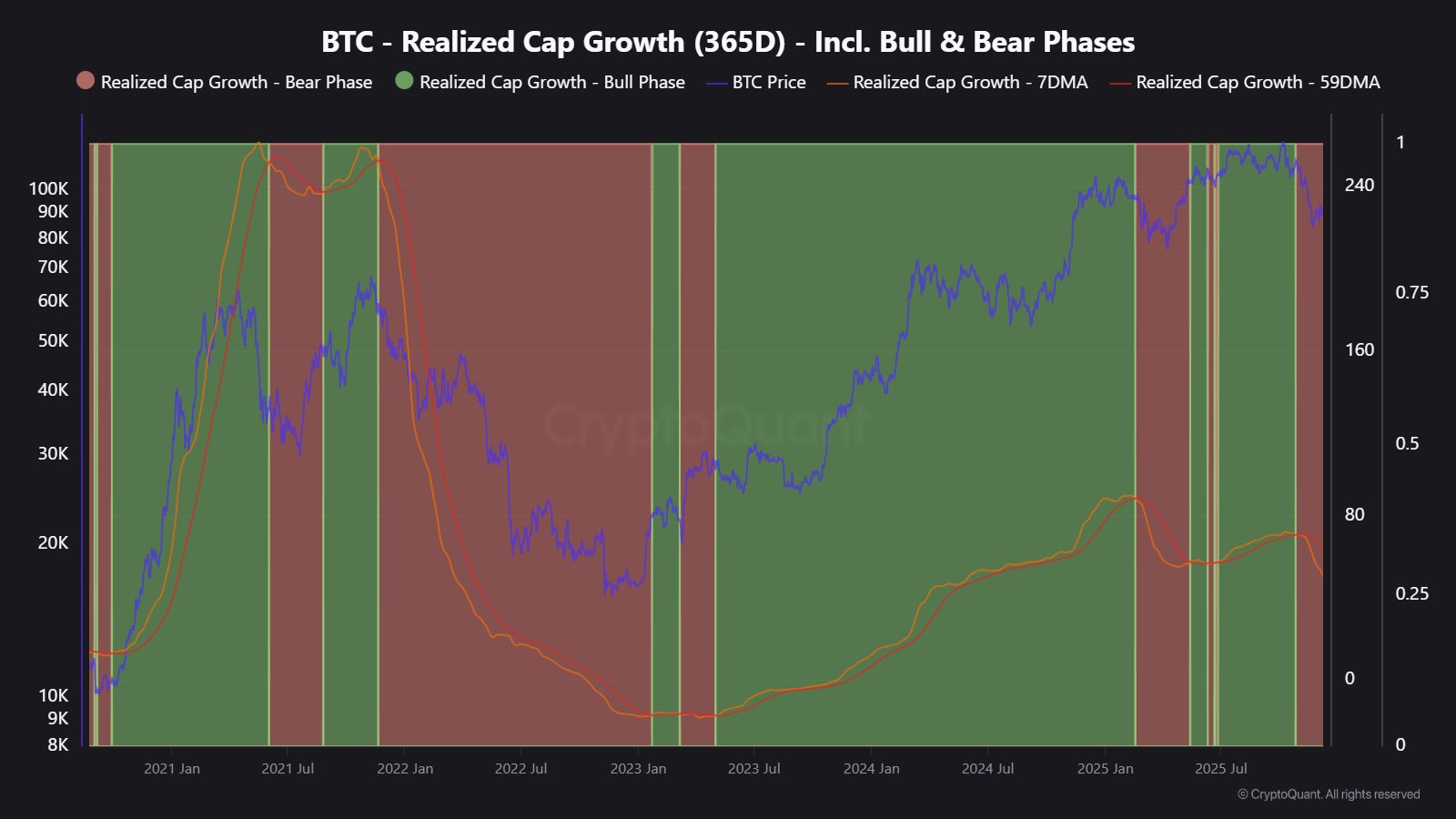
As shown in the graph above, Bitcoin’s realized upper bound growth rate has recently seen a reversal in both the 7-day moving average and the 59-day moving average, with the former line breaking below the latter line.
This trend indicates that realized cap growth has slowed amid the recent market downturn. “This suggests that Bitcoin is losing momentum from new cost base inflows,” the analyst noted.
As the 7-day moving average is below the 59-day moving average, this indicator indicates that the market is currently in a “bearish phase.” The last time this signal held for an extended period of time was during the first few months of 2025, when it paralleled the decline in BTC. It remains to be seen how long this momentum from new capital inflows will remain weak for Bitcoin.
In other news, short-term Bitcoin holders remain under significant stress, as CryptoQuant author IT Tech pointed out in an X post.
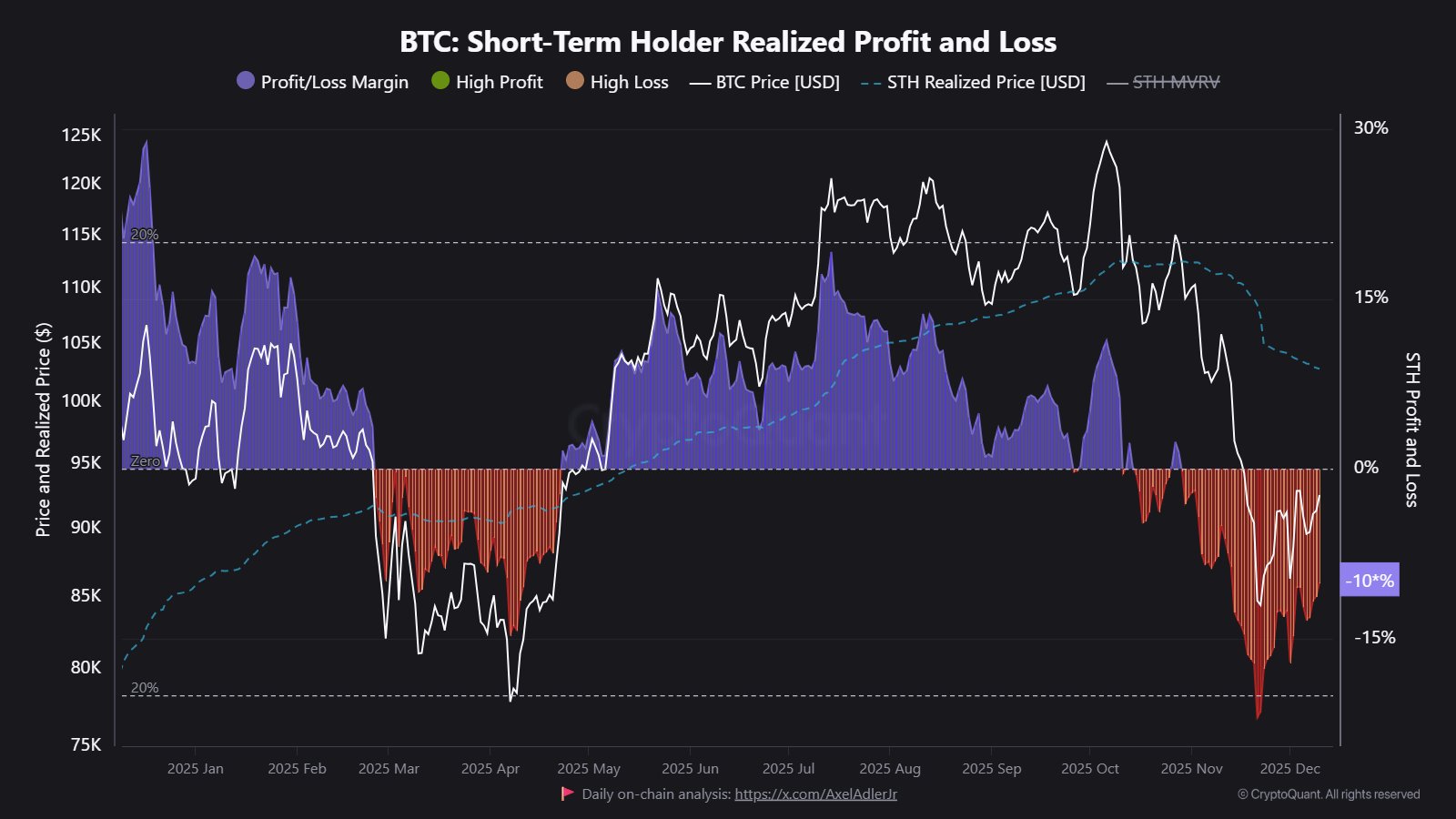
Short-term holders (STH) are defined as Bitcoin buyers who have entered the market in the past 155 days. Even though BTC has recovered since its November lows, STH is still down 10%.
BTC price
At the time of writing, Bitcoin was hovering around $92,400, down 1.5% over the past 24 hours.
Discover more from Earlybirds Invest
Subscribe to get the latest posts sent to your email.


